
What Is Bittensor? Decentralized AI Training Explained
By sundae_bar
The AI industry is consolidating fast. Three companies—Anthropic, OpenAI, and Google—now account for 88% of enterprise LLM API usage. Menlo Ventures For businesses and developers watching from the sidelines, the question is becoming urgent: is there another way to build and access AI that doesn't depend on a handful of corporate giants?
Enter Bittensor. This decentralized network is challenging the assumption that AI development must happen behind closed doors, offering an open system where anyone can contribute models, earn rewards, and access AI infrastructure without gatekeepers. Here's what you need to know.
The Problem With Centralized AI
Today's most powerful AI models are built by a small group of well-funded labs. OpenAI has made roughly $1.4 trillion in headline compute and infrastructure commitments CNBC as it races to build massive data center campuses. The resources required to compete at this level are astronomical.
This concentration creates real concerns. According to a Harris Poll commissioned by DCG, 74% of U.S. respondents believe AI would benefit more people if it weren't controlled by just a few big companies. CoinDesk The same survey found that 65% don't trust elected officials to steer AI's development. CoinDesk
The public appetite for alternatives is clear. 75% of consumers believe decentralized AI is more likely to support innovation and progress than centralized AI Business Wire, and 71% see decentralized AI as more secure for consumers' personal data. Business Wire
What Is Bittensor?
Bittensor is a decentralized network for artificial intelligence development—an open network where anyone can create, train, and access AI. Grayscale Think of it as a peer-to-peer marketplace for machine learning, where contributors compete to build the best AI and earn rewards for their work.
Bittensor runs on Subtensor, a proof-of-stake blockchain that coordinates decentralized AI development. 21Shares The network is organized into specialized workspaces called subnets, each focused on different AI tasks like text generation, code writing, or data analysis.
The key innovation is the incentive structure. Bittensor operates as an open network that uses crypto-economic incentives to coordinate machine learning development, rewarding contributors of models and computing power with TAO. CoinDesk Unlike traditional AI development where improvements stay locked inside corporate labs, Bittensor makes advancement a public, competitive process.
How the Subnet System Works
Subnets are the building blocks of Bittensor. As of October 2025, Bittensor hosts over 129 active subnets, each dedicated to different AI tasks. 21Shares The subnet count has grown rapidly—since the start of 2025, the number of subnets has increased 97%, from 65 to 128. BeInCrypto

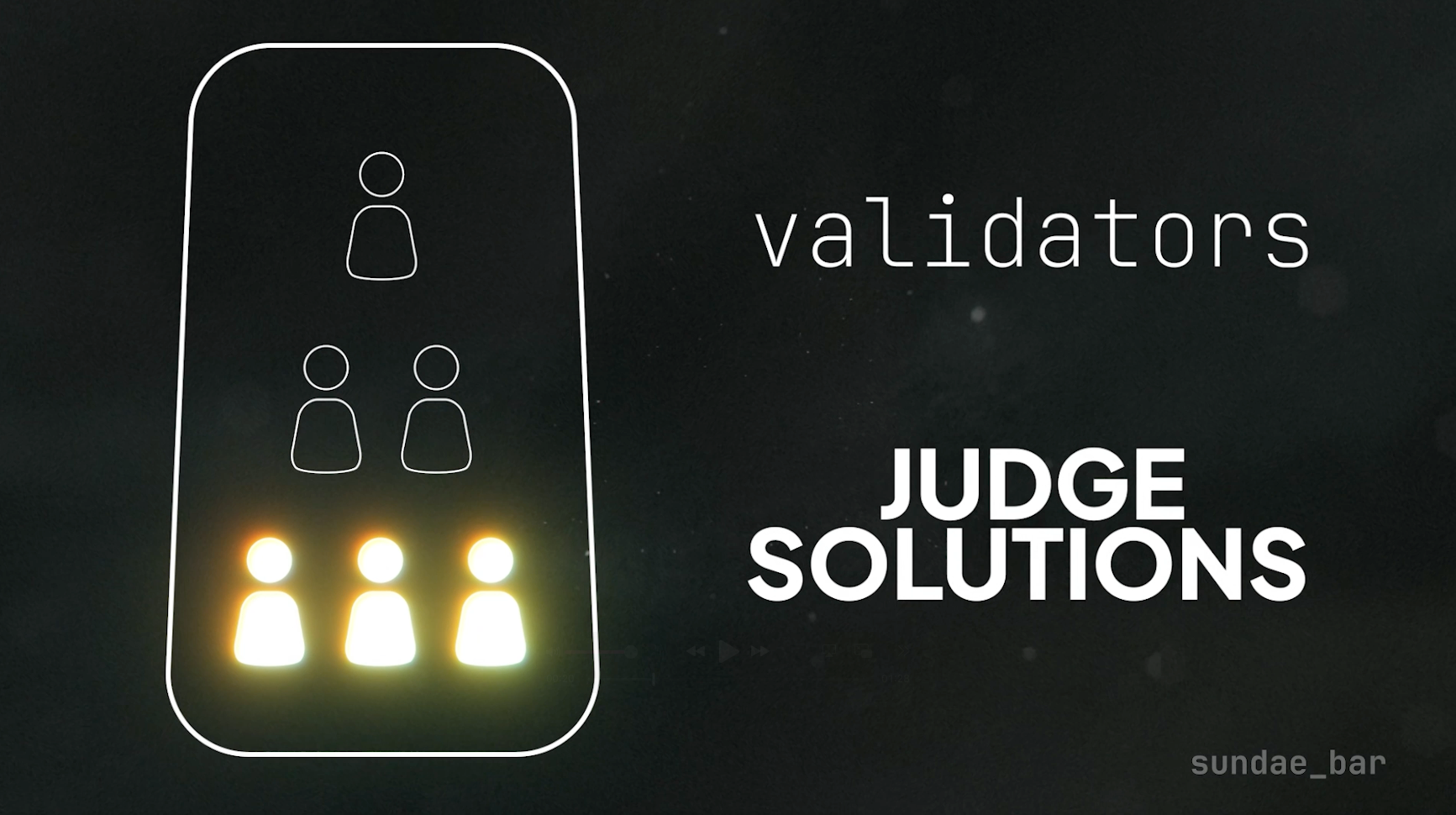
Each subnet operates as its own competitive economy. Miners deploy and train models that provide AI services. Validators stake TAO and evaluate these models using Yuma Consensus, an algorithm that scores the relative value of each model's output. 21Shares Subnet owners set the rules for participation and define what tasks the subnet will tackle.
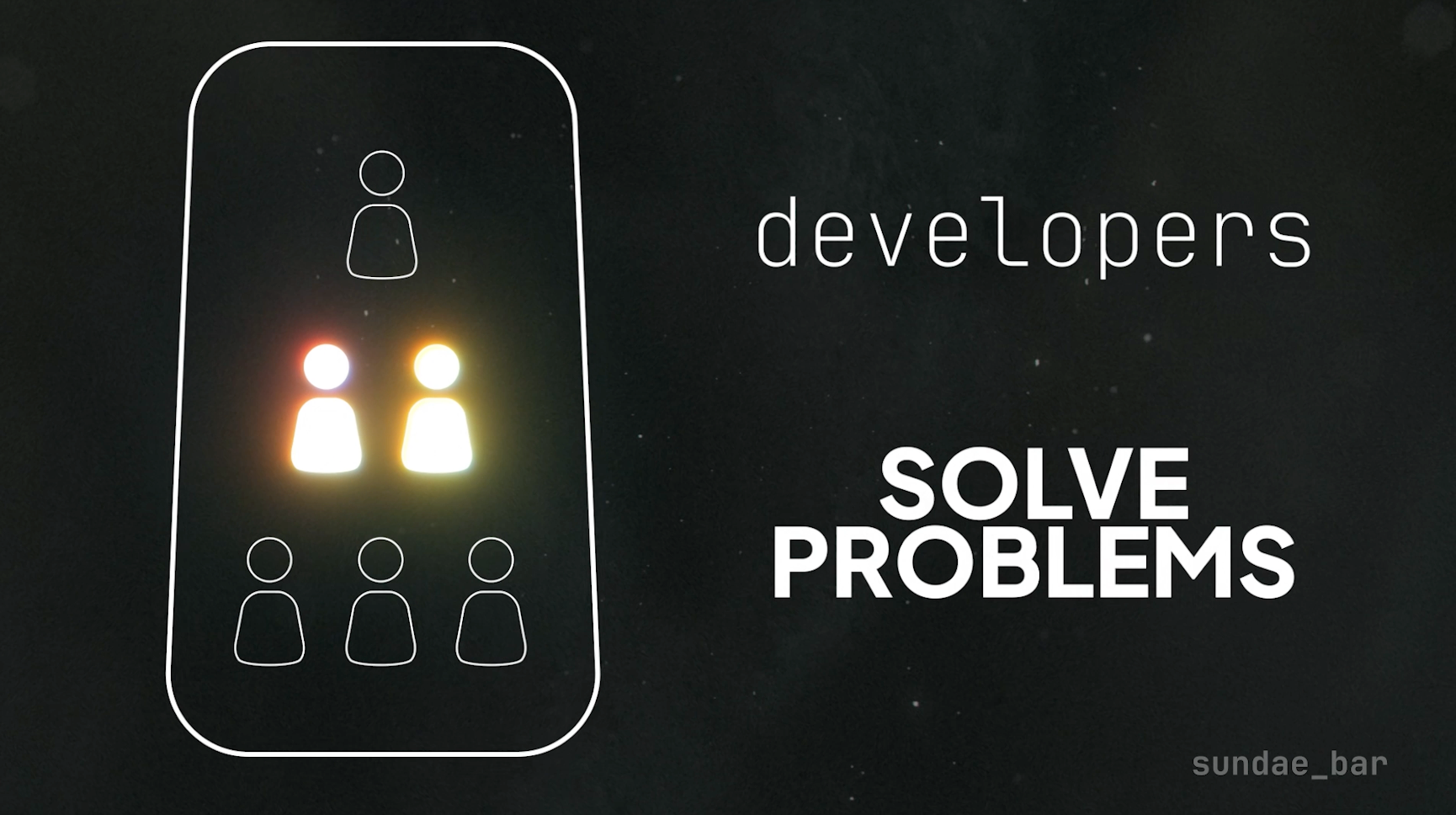
The result is a meritocratic system where the best-performing models earn the most rewards. "The result is a meritocratic, self-improving ecosystem where useful intelligence doesn't come from one lab or one corporation but emerges organically from a worldwide, permissionless community," BeInCrypto according to Sergey Khusnetdinov, Director of AI at Gain Ventures.
The TAO Token and Economic Model
TAO is the native cryptocurrency that powers Bittensor's incentive system. Like Bitcoin, Bittensor's native token follows a four-year halving cycle. Grayscale The network completed its first halving in December 2025, reducing daily token emissions from approximately 7,200 TAO to 3,600 TAO. Grayscale
This matters because it creates scarcity while maintaining incentives for contributors. No TAO was pre-mined or sold through an initial coin offering. All tokens are earned through mining or staking. 21Shares Currently, around 73% of supply is staked, reflecting strong long-term conviction. 21Shares
The economic model distributes rewards across the ecosystem. Miners earn TAO for contributing high-quality models. Validators earn for accurately scoring submissions. Subnet owners earn for creating valuable coordination spaces. This alignment of incentives is what makes the whole system work.
Why Decentralized AI Training Matters
The advantages of decentralized AI go beyond ideology. Decentralized AI infrastructure offers a solution to concerns around data privacy and sovereignty. By moving away from centralized models, enterprises can ensure that their data remains within their control. Civo
Decentralized AI offers several benefits over traditional AI models. It improves data security and privacy by distributing information across a network. Scalability is another advantage, as the system can efficiently handle growing datasets and computational demands. Interexy
For developers and startups, the economics are compelling. Decentralized systems can reduce computing costs by up to 80% compared to cloud providers Medium while eliminating single points of failure. Open, smaller, purpose-built models and AI applications are significantly more efficient to build, train and deploy Red Hat than the massive LLMs from centralized providers.
The innovation benefits are equally significant. When work is shared openly and others have the ability to build upon it, an enormous amount of time and effort is saved by teams not having to start from first principles with every new project. Red Hat
Institutional Interest Is Growing
Bittensor has moved beyond the experimental phase. Grayscale filed an initial S-1 registration statement with the SEC for what would be the first U.S.-listed exchange-traded product offering exposure to TAO. CoinDesk The proposed Grayscale Bittensor Trust would trade under the ticker GTAO.
Custody providers including BitGo, Copper and Crypto.com have joined via Yuma's validator, demonstrating institutional interest. CoinDesk In October 2025, Yuma Asset Management launched with a $10 million anchor investment from DCG CoinDesk, offering institutional and accredited investors exposure to the Bittensor ecosystem.
"Subnet tokens are an emerging asset class, fueled by TAO, that provide investors with unprecedented exposure to a massive wave of AI innovation," CoinDesk said Barry Silbert, Yuma CEO. "The decentralized AI sector has the power to be as transformative as Bitcoin." CoinDesk
Real-World Applications: How Subnets Create Value
Subnets aren't theoretical—they're building AI infrastructure that businesses can actually use. Each subnet specializes in solving specific problems, from fraud detection to on-device AI to code generation. The competitive dynamics mean that only the best solutions survive.
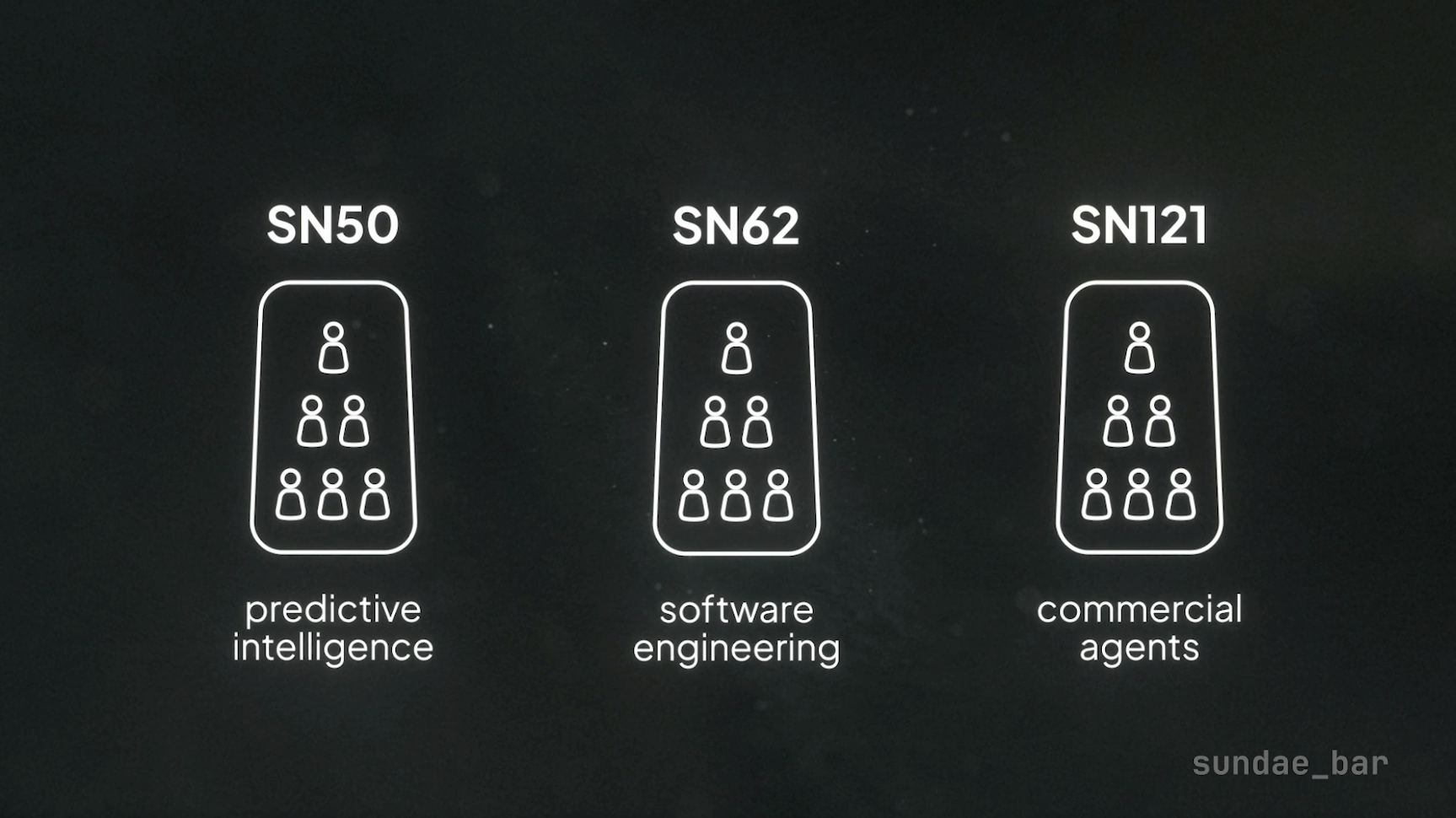
This is where platforms like sundae_bar come in. SN121, the sundae_bar subnet on Bittensor, focuses specifically on building a generalist AI agent for real business workflows. Miners compete to improve the agent's ability to handle tasks like scheduling, reporting, data access, and end-to-end execution. The winning agent deploys to the sundae_bar marketplace, where businesses can rent and customize it for their own operations.
The model creates a self-reinforcing loop: business revenue funds miner rewards, which attracts better developers, which improves the agent, which generates more revenue. It's decentralized R&D with real commercial accountability.
How Bittensor Compares to Traditional AI Development
Traditional AI development requires massive capital, specialized talent, and years of runway. In early 2025, the average base salary for a data scientist in the United States is over $125,000 Red Hat, and the truly large models require warehouse-scale computing infrastructure.
Bittensor flips this model. Instead of one company bearing all development costs, the network distributes both the work and the rewards. "Bitcoin proved that cryptographic incentives could coordinate a global network of hardware to secure a ledger," BeInCrypto explained Evan Malanga of Yuma. Bittensor applies similar principles to AI development.
The competitive structure also drives quality. These examples provide evidence that subnets powered by the Bittensor network can potentially produce AI services that rival or exceed leading centralized AI competitors. Grayscale When rewards go to the best performers, there's constant pressure to improve.
What This Means for Businesses
If you're a business evaluating AI options, Bittensor represents a fundamentally different approach. Instead of subscribing to a single provider's API, you can access AI services built through open competition. Instead of wondering what happens inside the black box, you can verify how models are trained and evaluated.
The practical benefits include reduced vendor lock-in, greater transparency, and access to AI infrastructure that improves continuously without requiring you to manage the development process yourself. Platforms like sundae_bar make this accessible by handling the complexity of subnet interactions and delivering production-ready agents.
For enterprises already drowning in disconnected AI tools, this is a path toward consolidation. One generalist agent, trained competitively across domains, customized to your workflows—that's the value proposition that decentralized training makes possible.
The Road Ahead
Decentralized artificial intelligence network Bittensor is "hitting escape velocity," with accelerating growth in subnets, wallets and institutional access CoinDesk, according to Yuma's State of Bittensor report. The infrastructure is maturing, the token economics are proven, and real businesses are starting to build on top of it.
The centralized AI giants aren't going anywhere. But the assumption that they're the only option is increasingly outdated. Bittensor offers a credible alternative—one where AI development happens in the open, where contributors are rewarded fairly, and where businesses can access intelligence without surrendering control.
Whether you're a developer looking to contribute, an investor evaluating the space, or a business searching for AI that actually works, Bittensor is worth understanding. The future of AI may not be built in a handful of corporate labs. It might be built by a global network of competitors, collaborating through code and incentives, one subnet at a time.